
MAGAN · Fuxing wandering
Laqi na Tayal: A Day in sbunaw
Step into Sbunaw for more than a day of sightseeing. Make your own kuni, walk the forest trail to Tkasan, share a meal by the fire, and bring the day home through your travel memory journal.
How the day unfolds
A simple look at how the day moves from PLUWFUN into Sbunaw and back again.
01
Set out for Sbunaw
Leave PLUWFUN and travel into Sbunaw.
02
Make your own kuni
Prepare a mountain lunch to carry with you into the forest.
03
Forest・Tkasan
Follow local hosts into the forest and the old settlement of Tkasan.
04
Share a meal by the fire
Open your kuni and share food and stories in the mountains.
The day begins in Jiaobanshan. Travelers make their own kuni, carry it into the forest, walk through the mountain landscape, listen to stories from local people, and finally open their lunch beside the fire.
This is not a tour built around checking off sights. It is a day spent slowly stepping into Sbunaw.
Today’s lunch starts with making it yourself.
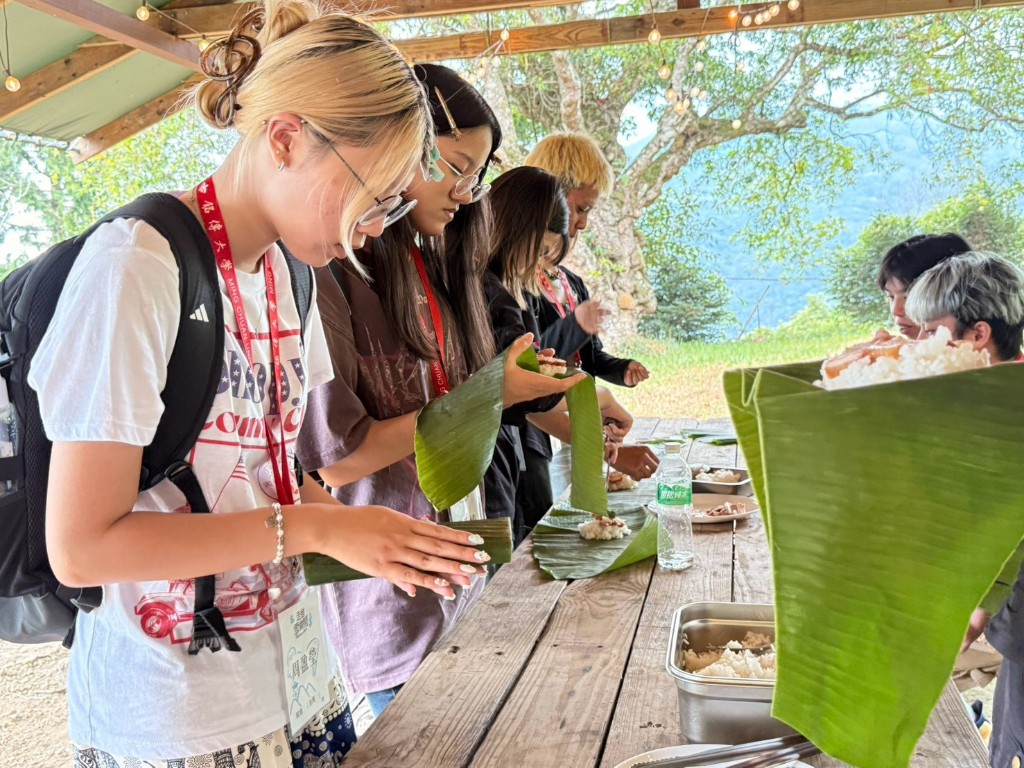
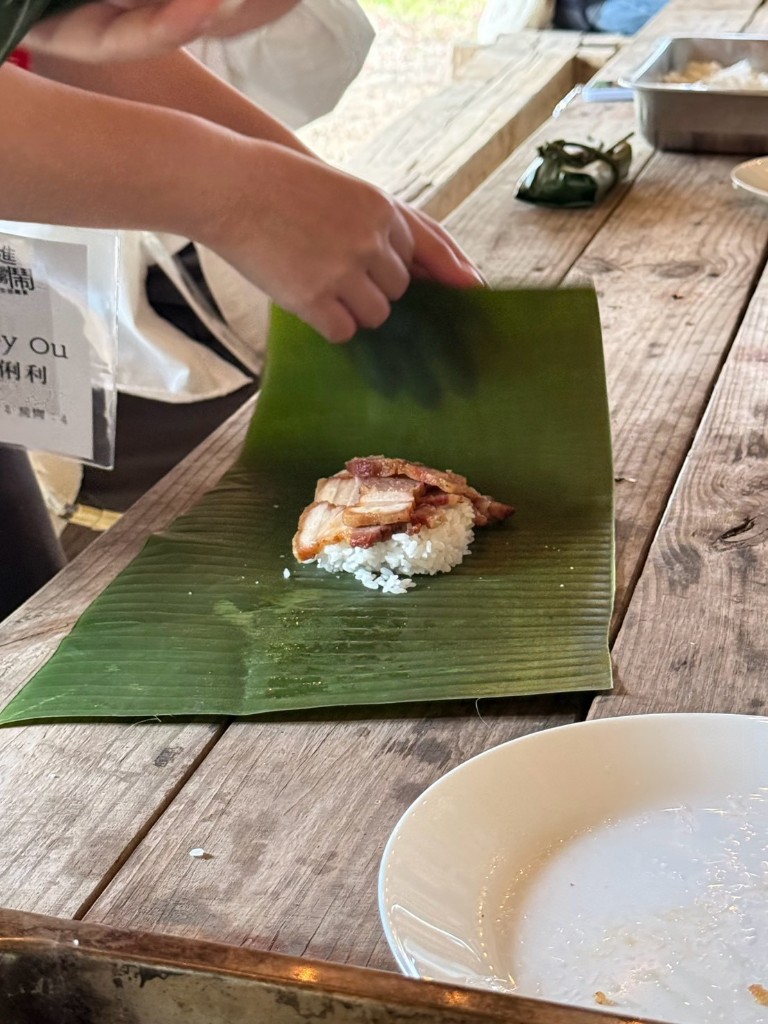
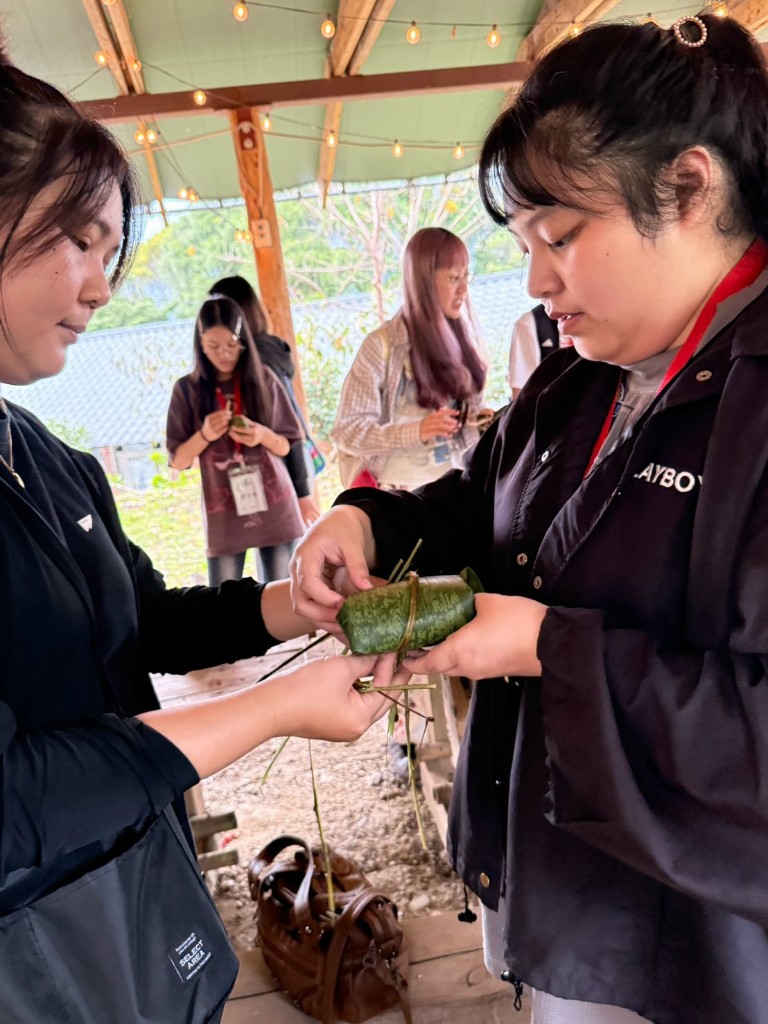
The first time people see kuni, a traditional Tayal leaf-wrapped meal, it can look like rice simply folded into a leaf.
Once they sit down and try, the leaf, the rice, the meat, and the plant fiber used to tie it all turn out to be a way of packing food that mountain life kept.
The kuni each traveler finishes does not stay on the table. It goes into the mountains with them.
The lunch you wrap is the lunch you carry into the forest.
Once the kuni is packed, the day actually begins.
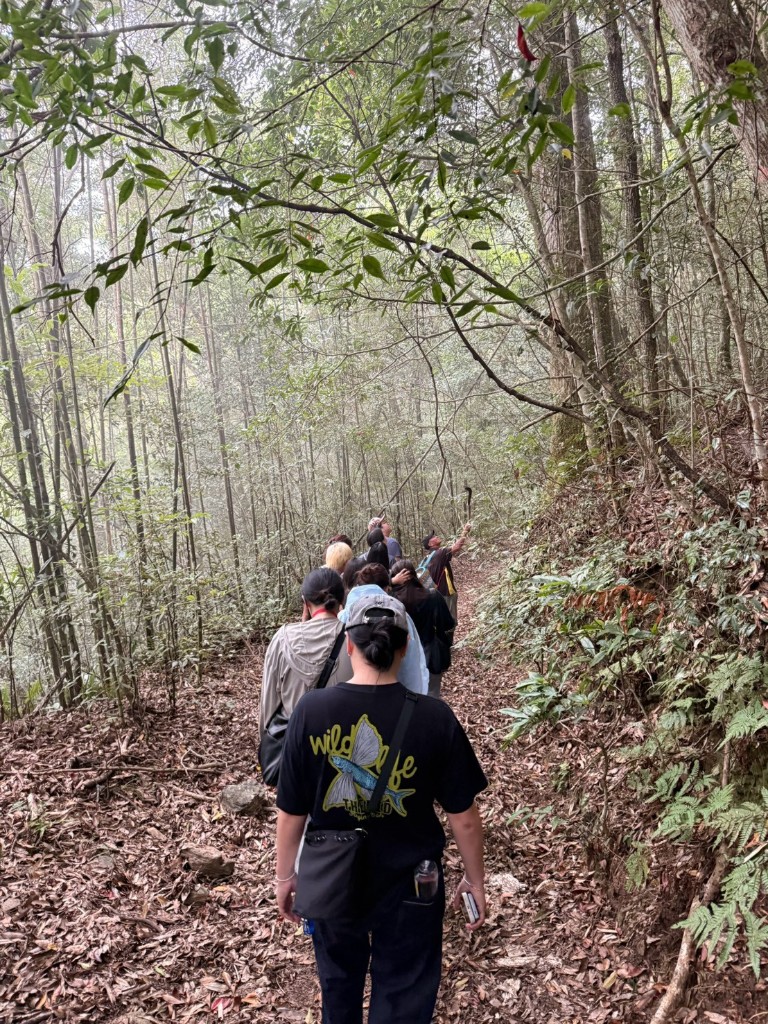
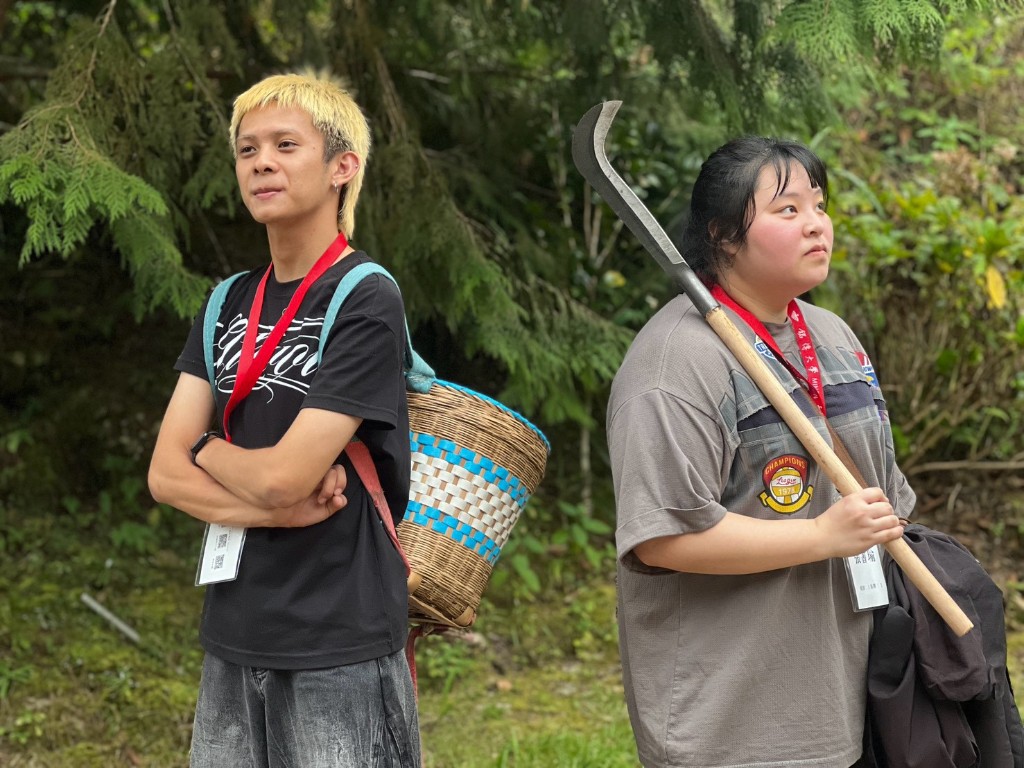
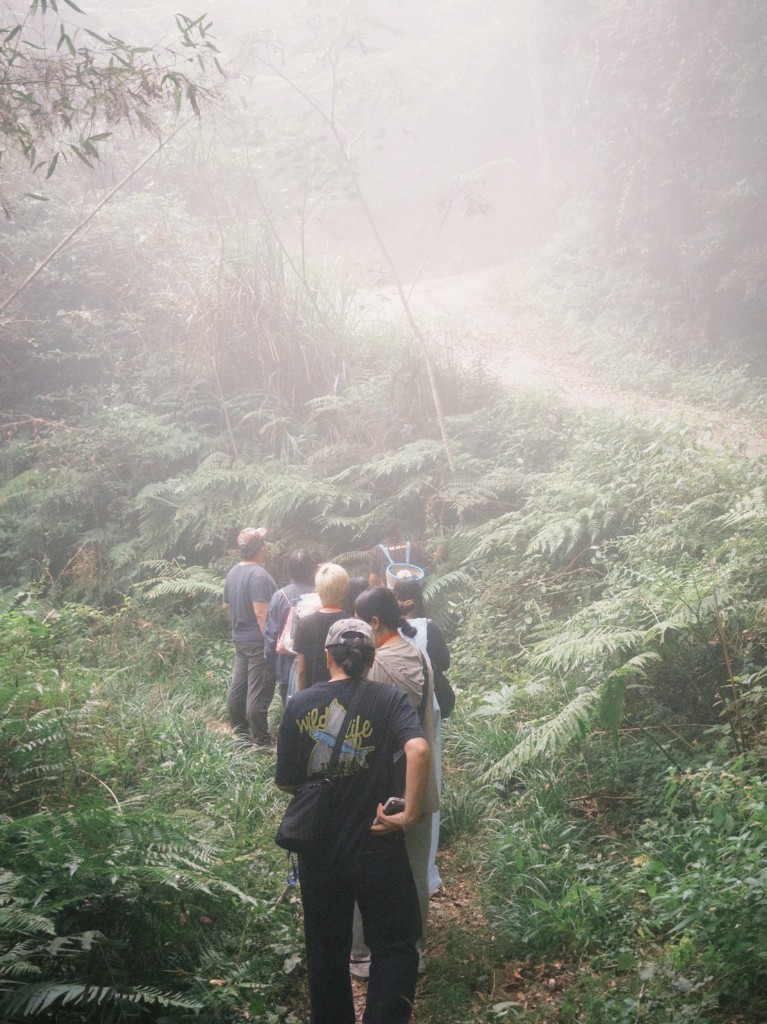
After the flat ground, the road slowly becomes a trail.
Travelers follow local people into the forest. There is no rush from viewpoint to viewpoint, and no microphone running the whole way.
Sometimes the walking just stops. Someone ahead turns around: “Smell this.” “People used to use this.” “An animal passed through here.”
The forest, which had only been background, starts to become interesting.
The interesting things are never on a sign.
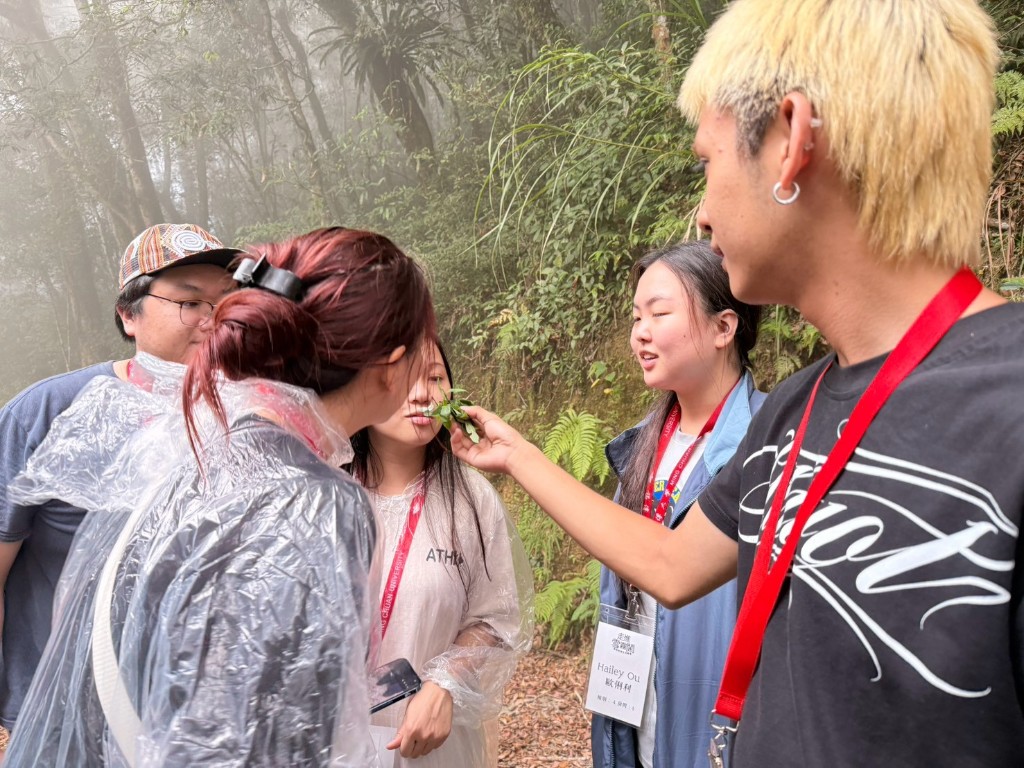
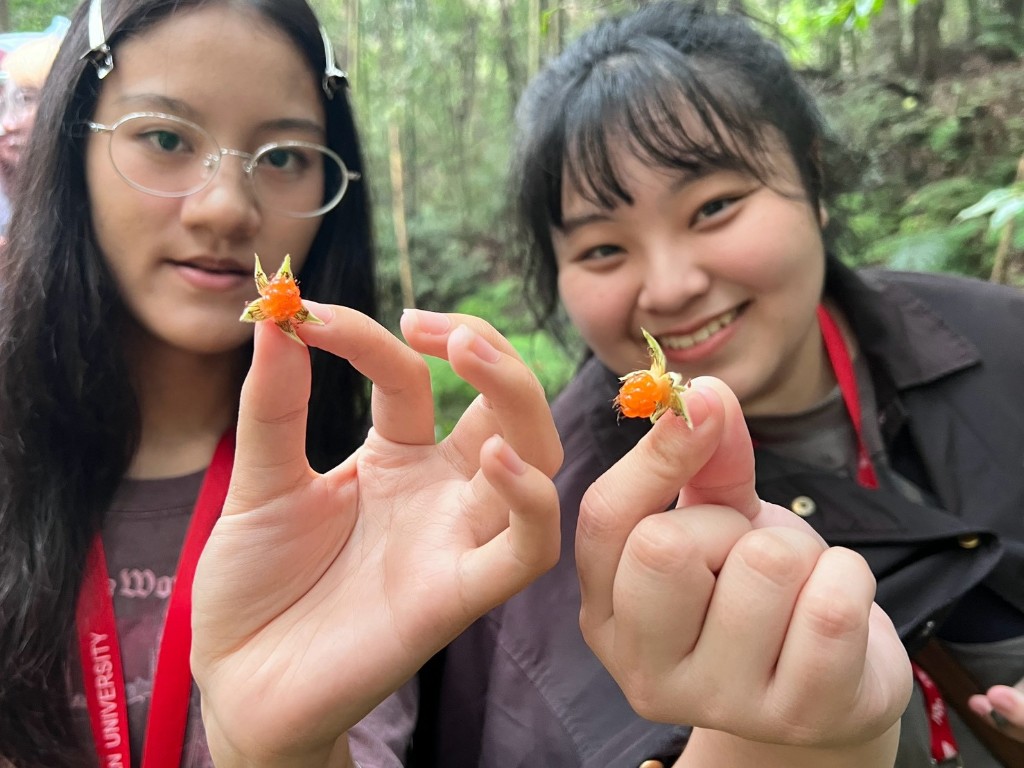
Someone touches one of these plants for the first time. Someone else learns that an ordinary leaf, or a length of vine, used to be part of everyday life.
The trail also leaves small surprises: a fruit, a scent, a trace an animal left behind.
None of these are arranged photo stops. They are often the pictures people remember longest.
At the old settlement, everyone really sits down.
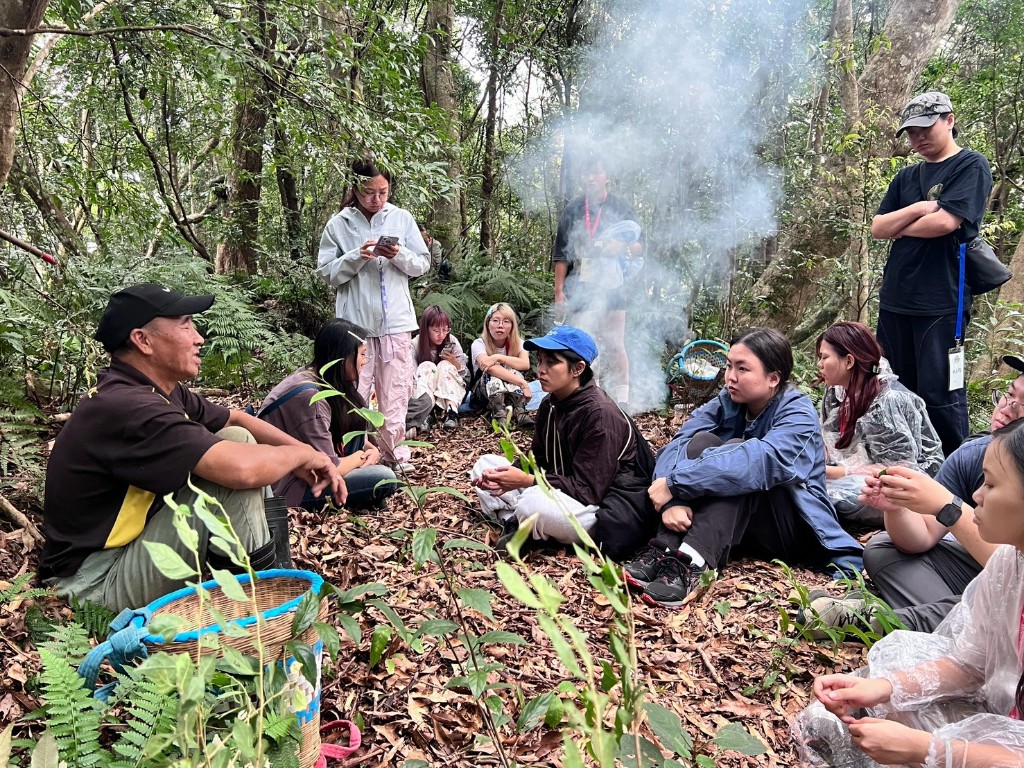
The trail leads into the Tkasan old settlement cultural area. Tkasan is one of the old settlement areas within the wider cultural landscape of Sbunaw.
There is no row of display boards, and no five-minute talk people hear standing up before they leave.
Everyone finds a place to sit. A fire comes up slowly, and the local stories start from there.
What travelers hear is more than a place name. It is how life in Sbunaw was lived, remembered, and carried into today.
A shared low-waste meal in the mountains
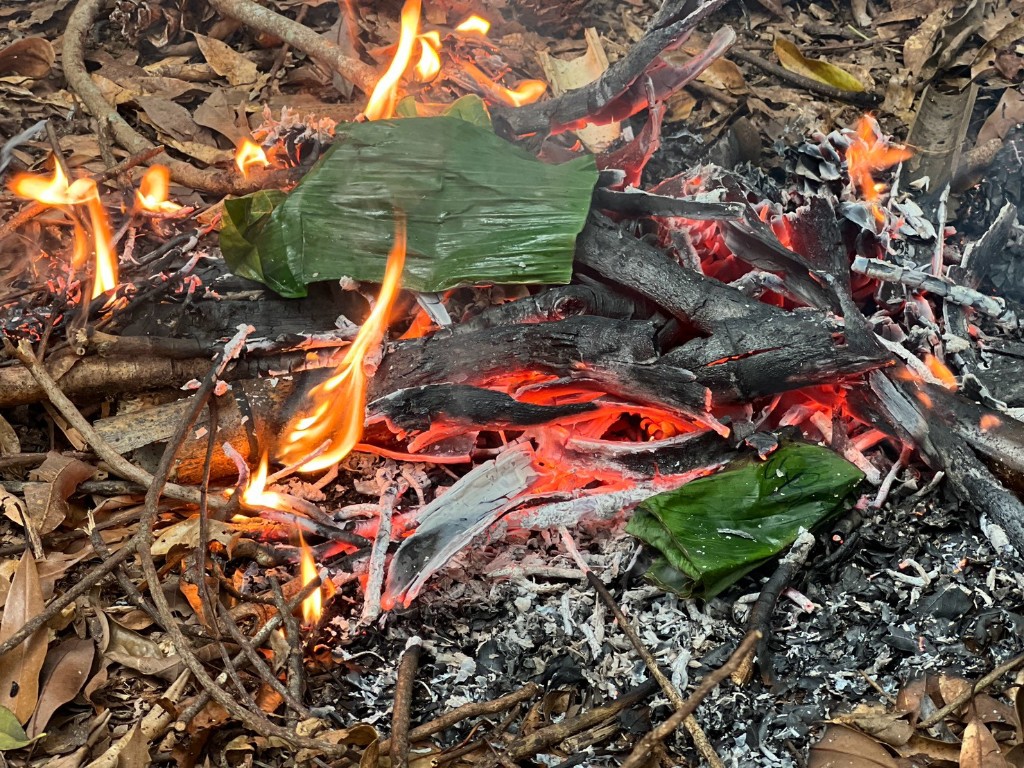
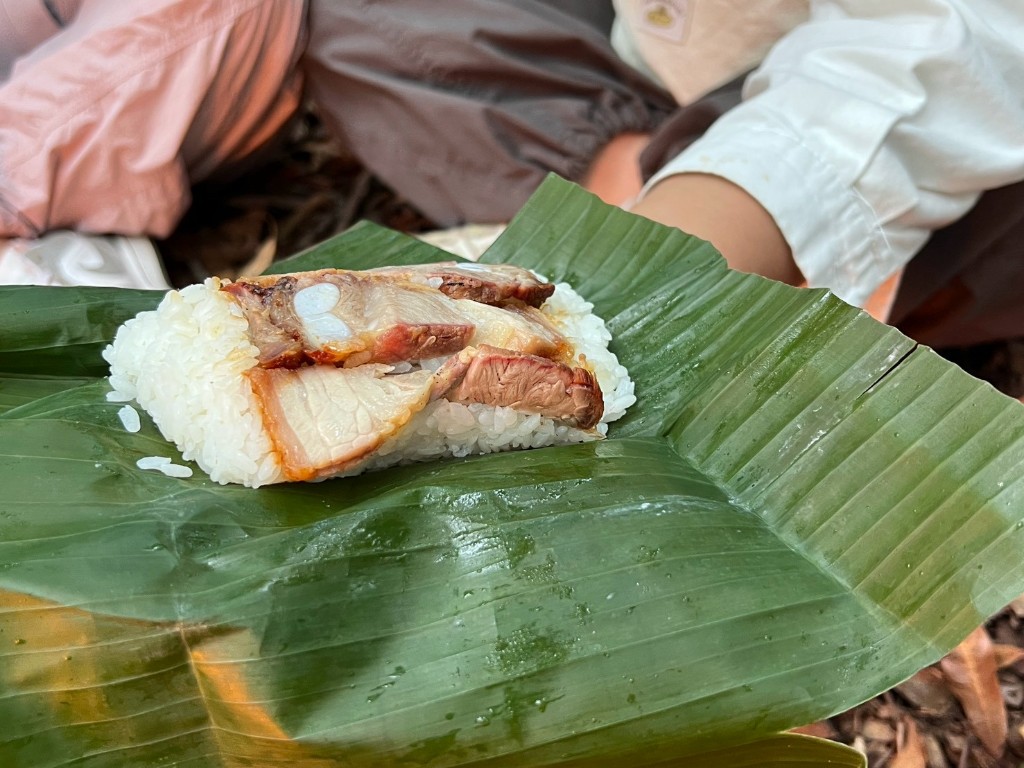
After the walk through Tkasan, no one is in a hurry to leave. The fire is still going. The kuni made that morning and carried into the mountains is finally opened.
Inside the leaves are rice and meat, with a little smoke from the fire and the forest. The meal also has trout grilled in leaves, and an egg steamed slowly in a bamboo cup.
There is no second table. Leaves hold the rice and the fish. Bamboo holds the egg. Everyone sits in the mountains and finishes the meal together.
Leaves, bamboo, and tableware that can be used again mean this meal depends less on disposable boxes, plastic bags, and single-use dishes.
Lunch here is more than lunch. Food, materials from the mountain, fire, and knowledge people have kept using all meet in the same meal.
Laqi na Sbunaw — I am a person of Sbunaw.
After walking the same trail, making food together, and sitting in the forest to hear stories, the phrase is no longer only a line of language to learn.
It feels more like a small relationship between the traveler and this place.
Laqi na Sbunaw
I am a person of Sbunaw.
After a while on the trail, people start to know each other.
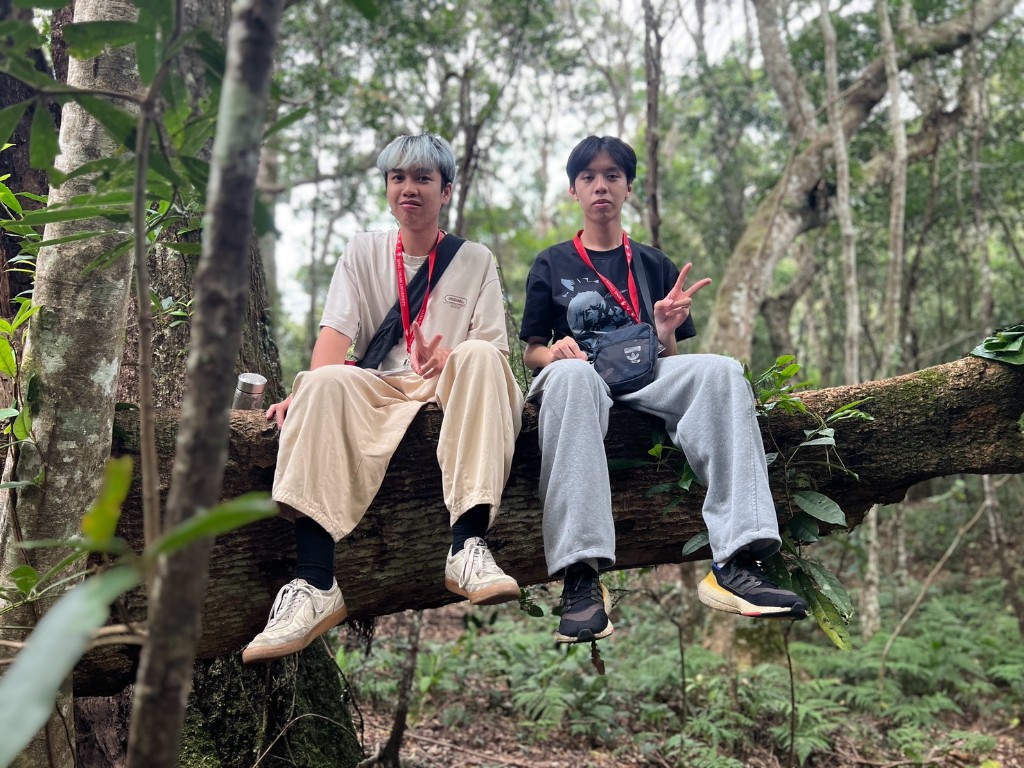
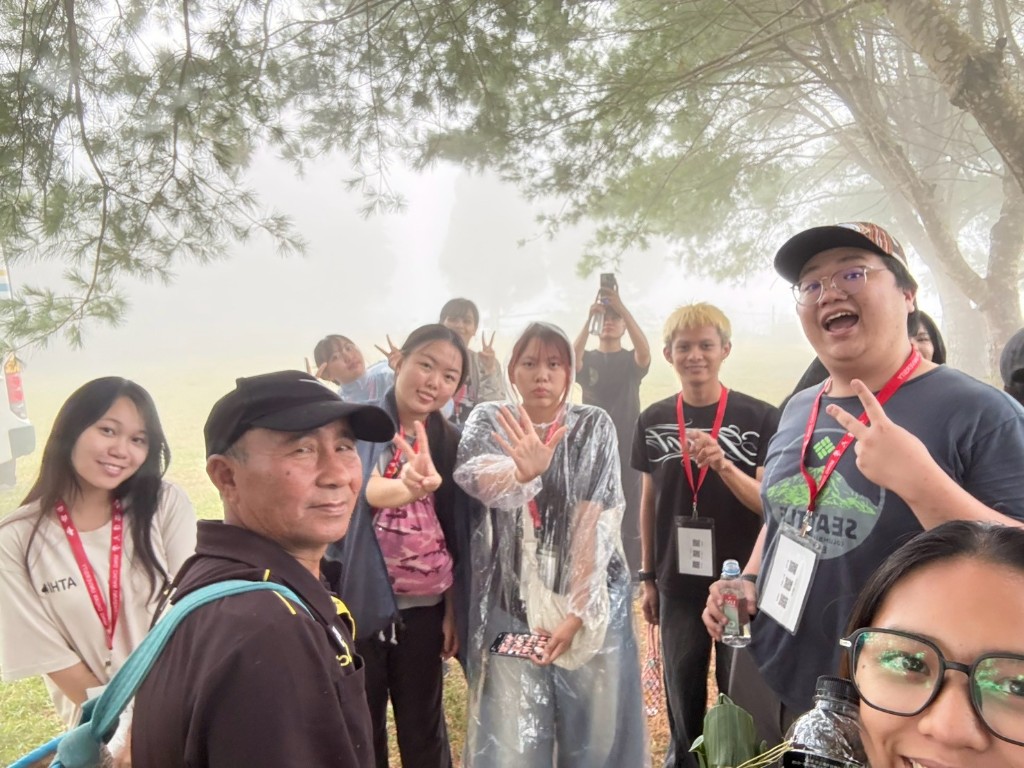
After wrapping food, walking the mountain path, and sitting by the fire, people who arrived as strangers are usually taking photos, talking, and trading what they noticed.
That is one of the pleasures of this trip. It is not one long class.
A lot of what stays is the small things along the way.
Coming down the mountain is not the end of the day.
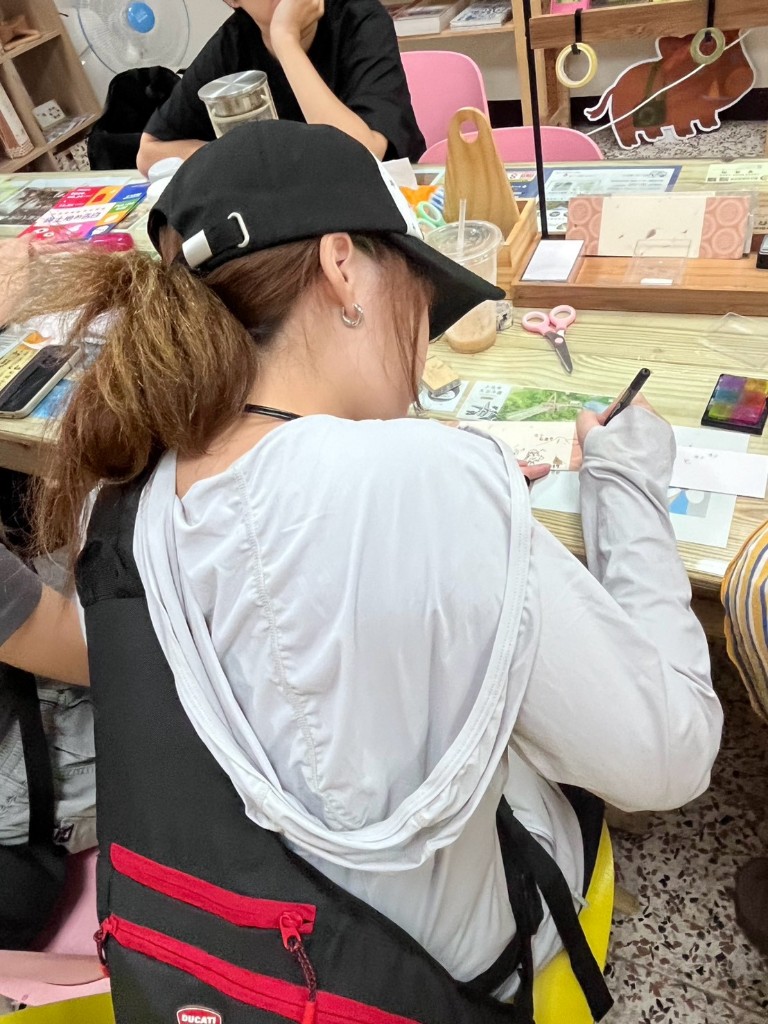
Back at PLUWFUN in Jiaobanshan, they sit down once more.
It is not a test, and it is not a standard feedback form.
Instead, it lets you slowly gather what you saw, tasted, and photographed that day into your own travel memory journal.
Photos, stickers, a sentence, and a stamp go into a travel memory journal, so the day becomes something they can actually take home.
Take the day home.
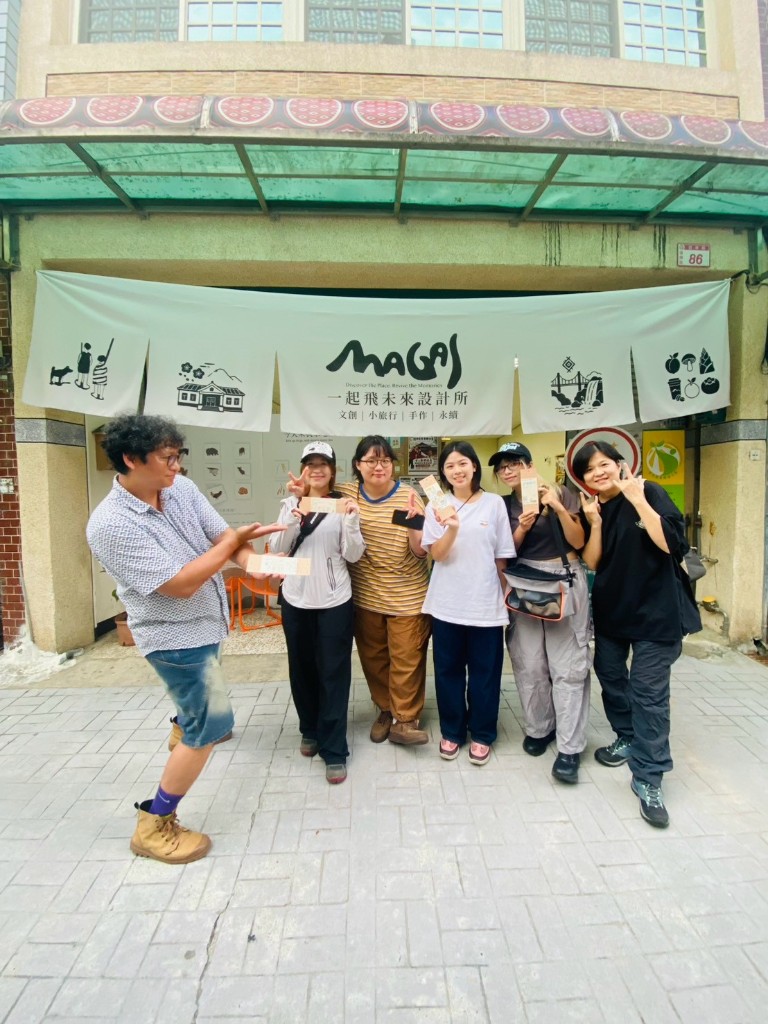
Back on the street in Jiaobanshan, the finished journal is in their hands.
A journal, a travel ticket, a stamp, and maybe one stretch of trail only they will remember.
What Laqi na Tayal leaves behind is not only photographs. It is a day that was actually spent in Sbunaw.
A lot of today’s small choices are already low-carbon travel.
Wrapping a kuni in plant material, walking into the mountains, using things more than once, and spending the day with local cultural hosts.
From preparing kuni and using leaves and bamboo to walking into the mountains, these small choices help the journey rely less on single-use dining items.
These ordinary parts of the day are the trip’s sustainability design.